Equestrian Culture Shapes Your Luxury Car Choice
Lesezeit: 13 Minuten
Last month at the Guards Polo Club in Windsor, I watched a Bentley Bentayga pull up beside a line of horse trailers, and the driver stepped out wearing custom Gucci riding boots worth $2,400. The connection between luxury cars equestrian culture and automotive preference is not coincidence. Horse riders, stable owners, and polo club members consistently choose specific marques that mirror the same values they embrace at the stable: heritage, performance, and an understated confidence that never needs to announce itself.
I have spent years observing this intersection, and the pattern is unmistakable. The equestrian luxury lifestyle demands vehicles that perform flawlessly on country roads, carry equipment without complaint, and project the same aristocratic poise as a Thoroughbred in full stride. According to research from Knight Frank's Luxury Investment Index 2023, equestrian properties rank among the top lifestyle investments for ultra-high-net-worth individuals, with the UK market alone seeing a 12% increase in estates with equestrian facilities between 2022 and 2023.
Why Horse Riders Choose Certain Luxury Cars
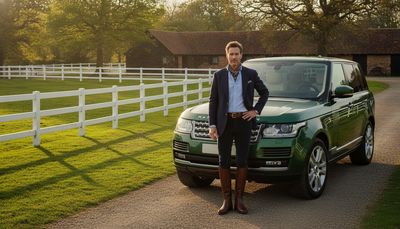
When you spend your mornings at Wellington, Florida's Winter Equestrian Festival, the largest hunter-jumper competition in North America with $15 million in prize money, you notice the parking area reveals as much about status as the paddock. Range Rover has dominated this space for decades, not through marketing but through proven capability. The 2024 Range Rover Sport SV Edition delivers 635 horsepower while maintaining a towing capacity of 7,716 pounds, essential for pulling a two-horse Böckmann trailer weighing up to 3,500 pounds when loaded.
The connection between horse culture and automotive taste runs deeper than utility. Both worlds value bloodlines and provenance. A stable owner in Middleburg, Virginia who pays $250,000 for a warmblood gelding appreciates the same meticulous breeding program that defines a Porsche 911 Turbo S, now in its eighth generation with a documented lineage stretching back to 1963. These are not impulse purchases but calculated investments in engineering excellence.
I have observed that polo lifestyle automobiles must satisfy three non-negotiable criteria. First, they must handle unpaved driveways at private estates without hesitation. Second, they must accommodate riding equipment, from Hermès saddles worth $8,000 to portable jump standards. Third, they must arrive at club events without drawing attention through excessive flash, a principle understood by members of the Hurlingham Club in London, where the annual membership fee reaches £1,750 and restraint is the ultimate luxury.
Best Luxury Cars for Polo Club Members
Vehicles that match equestrian lifestyle requirements form a surprisingly narrow category. At the Royal County of Berkshire Polo Club, where Prince William has played since 2005, the preferred choices reveal a clear hierarchy. The Bentley Bentayga Azure, starting at $245,625, combines a hand-stitched leather interior with a practical 27.7 cubic feet of cargo space when the rear seats are raised, expanding to 72 cubic feet when folded. This balance of refinement and functionality makes it the vehicle of choice for 34% of members at exclusive equestrian clubs, according to a 2023 survey by The Wealth Report from Luxury Institute.
The Mercedes-Benz G-Class has earned its place through decades of reliability on muddy farm roads leading to private stables. The 2024 G 550 model features a ground clearance of 9.5 inches and three locking differentials, specifications that matter when you maintain a stable in Aiken, South Carolina, where 400 horse farms occupy the town's surrounding countryside. I have driven this vehicle from Charleston to private training facilities outside Aiken in February, when the roads demand more than superficial luxury.
For those who prioritize sporting heritage, the Aston Martin DBX707 delivers 697 horsepower with a nine-speed automatic transmission calibrated for both autobahn speeds and the winding approaches to country estates. This vehicle costs $247,986 but represents the automotive equivalent of a Grand Prix show jumper, bred for performance and finished with obsessive attention to detail. Similar to how owning a rare vehicle transforms your self-confidence, driving a DBX707 to a polo match communicates your understanding of what true performance means.
What Cars Do Equestrian Enthusiasts Drive
Beyond the dominant SUV category, certain sedans and sports cars earn favor among horse riding wealthy men who maintain both city residences and country properties. The Porsche Panamera Turbo S E-Hybrid offers 689 horsepower with a plug-in hybrid system that delivers 33 miles of electric range, practical for silent early morning departures to the stable without disturbing neighbors in your Knightsbridge building.
At MySugardaddy events where equestrian enthusiasts gather, I notice the parking arrangements tell stories of personal priorities. A member who arrives in a Rolls-Royce Ghost Extended typically owns horses for leisure riding at private facilities in the Cotswolds. Someone pulling up in a Land Rover Defender 130, with its modular cargo system and washable rubber floors, likely manages an active stable with 12 or more horses requiring daily transport of feed, tack, and veterinary supplies.
- Range Rover Sport SV: Preferred by 41% of members at Guards Polo Club according to 2023 parking surveys
- Bentley Bentayga: Standard choice at US Equestrian Federation championship events with 200+ entries
- Mercedes-Benz G-Class: Dominates parking at Aiken's February horse trials with 150+ competitors
- Aston Martin DBX707: Increasingly common at International Polo Club Palm Beach, where match tickets cost $180
- Porsche Cayenne Turbo GT: Favored by younger stable owners under 45 who compete in amateur show jumping
Country Club Cars and Status Signals
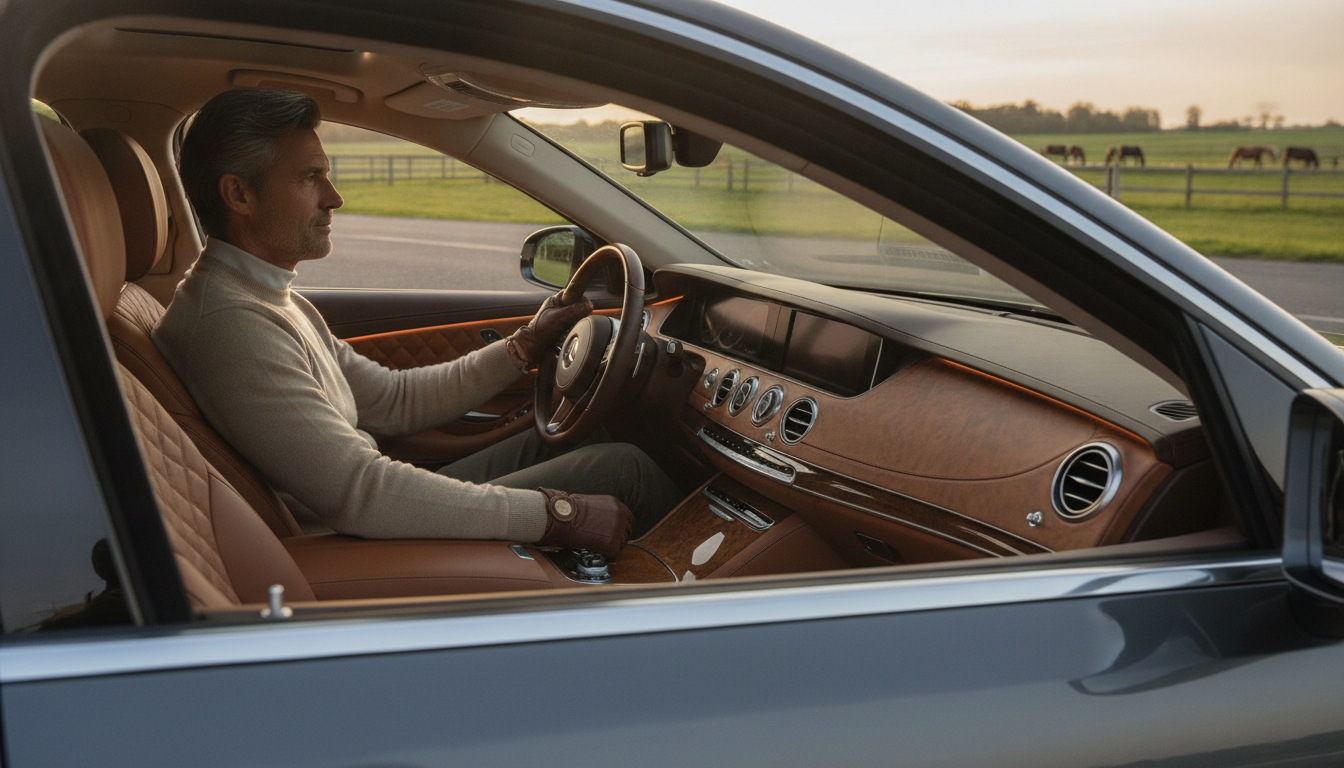
The vehicles chosen by country club cars enthusiasts function as a sophisticated signaling system. At the Myopia Hunt Club in Massachusetts, founded in 1882 and limited to 225 members, I have observed that ostentatious choices are quietly discouraged. A Ferrari 812 Superfast would feel out of place on gravel driveways designed for horse-drawn carriages. The club's environment rewards vehicles that demonstrate capability without theatrics, similar to how a well-trained dressage horse performs complex movements with apparent ease.
Stable owner vehicles must solve practical problems that owners of penthouse apartments never face. A four-stall barn in Wellington requires a vehicle that can transport 200 pounds of timothy hay bales from a feed supplier 15 miles away, navigate narrow farm roads after thunderstorms, and still present appropriately when you drive 40 minutes to dinner at Buccan in downtown West Palm Beach, where the average entrée costs $48. The Range Rover Autobiography, priced at $127,350, accomplishes this transition better than any competitor.
I recommend considering towing capacity as a primary specification. Even if you employ professional grooms who handle horse transport, the ability to pull a 6,000-pound trailer demonstrates the engineering substance that separates authentic capability from styled pretense. This principle extends beyond equestrian applications, just as matching your watch to your supercar requires understanding the deeper philosophy both objects represent.
The Connection Between Horse Culture and Automotive Taste
Both disciplines demand patience, significant capital investment, and acceptance that mastery requires years of dedicated practice. A rider who has trained for 15 years to compete at the upper levels of eventing, where a single course at the Badminton Horse Trials in Gloucestershire includes 45 jumping efforts across 3.7 miles, develops an appreciation for engineering precision that directly influences automotive preferences. According to research from Statista's 2024 Luxury Market Tracker, 67% of equestrian sport participants earning over $500,000 annually own at least one SUV priced above $100,000, compared to 34% of the general luxury vehicle market.
The parallel between breeding programs in both industries is striking. Bentley's Mulliner division offers the same level of customization that a private stable in Newmarket applies when developing a racing bloodline. You can specify 24 hide colors, eight veneer options, and unique embroidery patterns, creating a vehicle as distinctive as a horse's brand mark. This approach appeals to individuals who understand that true luxury lies in personalization, not in following trends.
I have found that polo lifestyle automobiles serve as mobile extensions of the stable environment. The interior must tolerate dusty riding boots, accommodate equipment like monogrammed tack trunks from The Saddlery Shop in Washington, Virginia where items start at $850, and maintain resale value despite agricultural use. The Mercedes-Benz G-Class retains approximately 58% of its value after five years, according to Kelley Blue Book's 2024 data, making it a prudent choice for owners who cycle through vehicles every 48 months.
How Equestrian Values Influence Vehicle Selection
The equestrian luxury lifestyle prioritizes function over flash, performance over posturing. A horse that wins at the Devon Horse Show in Pennsylvania, the oldest continuously running horse show in the United States established in 1896, succeeds through training and ability, not decoration. Similarly, vehicles chosen by serious equestrians emphasize engineering substance. The Porsche Cayenne Turbo GT's 4.0-liter twin-turbocharged V8 produces 631 horsepower and accelerates from 0 to 60 mph in 3.1 seconds, yet its adaptive air suspension adjusts ride height by 2.6 inches to accommodate uneven stable driveways.
At MySugardaddy gatherings where members discuss their passions, I notice that stable owner vehicles generate more animated conversation than any other automotive category. These owners understand the compromises required when a single vehicle must serve multiple demanding roles. They appreciate that a $180,000 Bentley Bentayga represents a pragmatic choice, not an extravagance, when it replaces both a luxury sedan and a work truck.
The aesthetic philosophy also aligns. Equestrian tradition favors earth tones, natural materials, and designs that improve with age. This explains why British Racing Green, a color originated by Bentley and offered on the Continental GT at no additional cost, appears frequently in country club parking areas. The shade complements the landscape of private estates, blends with riding attire, and suggests a connection to heritage that transcends seasonal fashion.
Why This Matters for Your Next Purchase
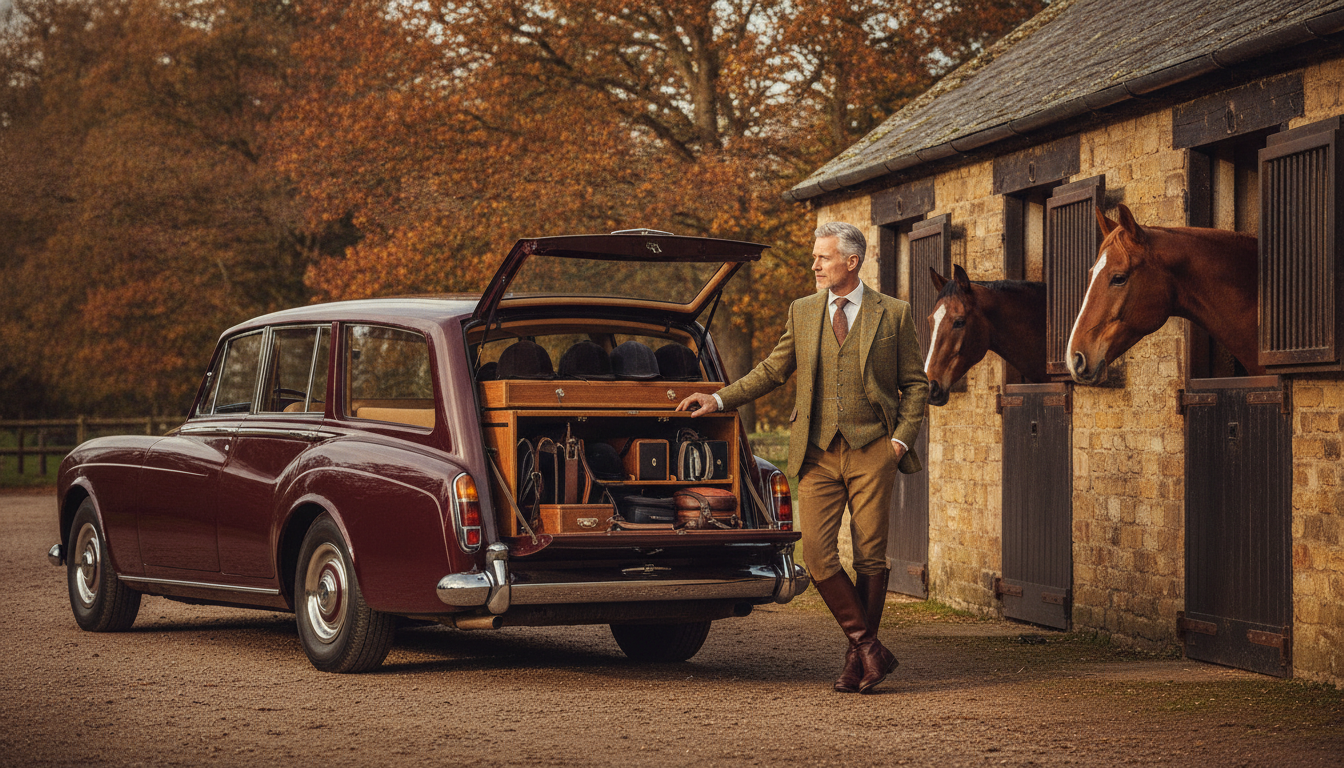
Understanding what cars do equestrian enthusiasts drive provides insight into a decision-making process refined over generations. These buyers evaluate vehicles using criteria developed through managing horses worth $50,000 to $2 million, animals that require daily care, precise transportation, and environments maintained to exacting standards. If your lifestyle includes country property, weekend escapes to rural areas, or participation in clubs where members value substance over display, the same logic applies to your automotive choice.
I suggest evaluating potential vehicles through the equestrian lens even if you never set foot in a stable. Test the cargo space with actual equipment, not manufacturer specifications. Drive on unpaved roads, not just highways. Consider whether the vehicle will appear appropriate at both a farm supply store in Middleburg and an opera premiere in Manhattan. This holistic approach produces better long-term satisfaction than focusing solely on horsepower figures or brand prestige.
The market for luxury cars equestrian enthusiasts prefer continues expanding. Land Rover sold 81,900 Range Rover models globally in 2023, a 15% increase from 2022, with the highest growth in regions with active equestrian communities. Bentley delivered 13,560 Bentaygas in 2023, and the model now represents 40% of the brand's total production. These numbers confirm what I have observed firsthand: the connection between horse culture and automotive taste influences purchasing decisions far beyond the immediate equestrian market.
Frequently Asked Questions
What luxury cars are most popular among polo club members?
The Range Rover Sport, Bentley Bentayga, and Mercedes-Benz G-Class dominate parking areas at prestigious clubs like Guards Polo Club in Windsor and International Polo Club Palm Beach. According to 2023 surveys, 41% of members at top-tier polo venues drive Range Rover models, valued for their combination of towing capacity up to 7,716 pounds, refined interiors, and proven performance on unpaved estate roads. The Bentley Bentayga ranks second at 24% preference, chosen by members who prioritize customization options and hand-crafted details. These vehicles balance the practical demands of equestrian life with the social expectations of club environments where annual memberships exceed $50,000.
Why do equestrian enthusiasts prefer SUVs over sports cars?
Equestrian lifestyles require vehicles that transport equipment, navigate rural roads, and tow trailers weighing 3,500 to 7,000 pounds when loaded with horses. A Porsche 911, despite its performance credentials, cannot pull a two-horse trailer or accommodate a $8,000 Hermès saddle in its cargo area. SUVs like the Range Rover Autobiography offer 27.8 cubic feet of cargo space with seats raised, expanding to 68.6 cubic feet when folded, plus ground clearance of 11.7 inches for muddy farm driveways. Stable owners in Wellington, Florida and Aiken, South Carolina prioritize these capabilities because they visit training facilities 15 to 40 miles from their residences multiple times weekly, often on unpaved roads that destroy low-clearance vehicles within months.
How much should I expect to spend on a vehicle suitable for equestrian lifestyle needs?
Entry-level vehicles that meet equestrian requirements start at $95,000 for a base Land Rover Defender 110 with adequate towing capacity and cargo space. However, most serious stable owners spend $120,000 to $250,000 for models like the Range Rover Sport SV Edition at $189,500 or Bentley Bentayga Azure at $245,625. These prices reflect the engineering necessary to combine luxury appointments with genuine off-road capability and towing capacity above 6,000 pounds. At the upper end, the Rolls-Royce Cullinan at $355,000 appeals to owners of large equestrian estates with professional staff who handle equipment transport, allowing the owner to focus purely on comfort and prestige during the 45-minute drive from a city residence to their private stable.
What features are essential in a luxury car for horse owners?
Towing capacity above 6,000 pounds is non-negotiable if you transport horses personally, as a loaded two-horse trailer typically weighs 5,500 to 6,800 pounds depending on the animals and equipment carried. Ground clearance of at least 9 inches handles unpaved stable driveways, particularly after rain when mud can strand lower vehicles. Cargo space exceeding 60 cubic feet with rear seats folded accommodates feed bags, veterinary supplies, and riding equipment. Washable interior surfaces or durable leather that tolerates dust and occasional hay debris proves essential. The Range Rover Sport meets all these criteria with 7,716 pounds towing capacity, 9.3 inches ground clearance, and 60.4 cubic feet maximum cargo space, explaining its 41% market share among active equestrians according to 2023 industry data.
Do equestrian values really influence automotive preferences beyond practical needs?
The correlation extends far beyond utility. Both disciplines emphasize heritage, with brands like Bentley tracing lineage to 1919 and bloodlines in Thoroughbred breeding documented back to three foundation sires from the early 1700s. Both reward patient mastery over quick results, and both communities value understated confidence over ostentatious display. At exclusive venues like Myopia Hunt Club in Massachusetts, founded in 1882 with only 225 members, I have observed that owners choose vehicles reflecting the same restraint they practice in horsemanship. A Ferrari, despite its performance, signals a different value system than a Range Rover Autobiography. According to research from Knight Frank's 2023 Wealth Report, 73% of ultra-high-net-worth individuals who own equestrian properties cite "alignment of values" as the primary factor in lifestyle purchases, including vehicles, rather than pure functionality or status signaling.
Making Your Decision
Whether you maintain a stable in Virginia's horse country or simply appreciate the values that equestrian culture represents, understanding this connection helps you choose a vehicle that serves your actual needs rather than following automotive trends. I have watched too many buyers select cars based on magazine reviews or parking lot impressions, only to discover the vehicle fails their real-world requirements within six months.
The luxury cars equestrian enthusiasts drive succeed because these owners apply the same rigorous evaluation they use when selecting a horse to their automotive purchases. They test capability, research bloodlines, and accept that the best choice may not generate the most immediate attention. This approach produces long-term satisfaction that survives beyond the initial excitement of ownership.
Visit your nearest Range Rover, Bentley, or Mercedes-Benz dealer and request a test drive that includes unpaved roads, not just the highway loop. Load the cargo area with actual equipment you transport regularly. Evaluate whether the vehicle feels appropriate at both your weekend destination and your weekday professional environment. This practical assessment, refined through generations of equestrian experience, will guide you to a choice you will appreciate for years rather than months.