PCP Luxury Car: What Dealerships Won't Tell You Upfront

Lesezeit: 19 Minuten
Last March, I sat across from a sales consultant at a Porsche Centre in Stuttgart's Zuffenhausen district, reviewing what appeared to be an attractive PCP luxury car proposal for a 911 Carrera S. The monthly payment looked manageable at €1,280, the balloon payment seemed reasonable at €72,000 after three years, and the mileage allowance of 15,000 kilometers annually matched my usage pattern. Yet when I asked about excess mileage charges, wear-and-tear definitions, and early termination penalties, the consultant's confident demeanor shifted noticeably. Three questions had revealed what the glossy brochure concealed: a web of costs that would have added €14,300 to my total outlay.
Personal Contract Purchase agreements have become the dominant financing method for luxury vehicles in Europe and North America, accounting for approximately 88.9% of new premium car sales in the UK during 2023 according to Finance & Leasing Association data. The appeal is obvious: lower monthly payments than traditional loans, the option to return the vehicle without the balloon payment, and access to models that might otherwise strain even substantial budgets. What dealerships rarely volunteer during that initial consultation are the contractual tripwires that turn an apparently straightforward PCP luxury car deal into a financial commitment far exceeding your calculations.
The Mileage Cap Nobody Clarifies Properly
Dealerships present annual mileage limits as a minor administrative detail during PCP luxury car negotiations. The reality proves far more consequential. I agreed to 15,000 kilometers annually on that Stuttgart Porsche proposal, which translates to 45,000 kilometers over three years. The contract stipulated €0.28 per excess kilometer. Had I exceeded by just 5,000 kilometers across the term, I would owe an additional €1,400 at handback. Double that excess, and the penalty climbs to €2,800.
Premium car ownership through PCP agreements typically involves stricter per-kilometer penalties than mass-market vehicles. A Mercedes-Benz S-Class contract I reviewed at a dealership on Friedrichstraße in Berlin carried a €0.32 per-kilometer charge beyond the agreed limit. Bentley and Rolls-Royce contracts can reach €0.45 per kilometer. These figures appear abstract until you consider that a single European road trip from Munich to Côte d'Azur and back consumes approximately 1,800 kilometers, nearly exhausting an entire month's allowance if you've selected the standard 15,000-kilometer annual cap.
The compounding effect matters more than individual trips. I track my actual mileage against contracted limits in a simple spreadsheet, updating it monthly. This practice revealed that my average annual driving exceeded my initial estimate by 22%, a discrepancy that would have cost me €3,080 in excess charges over a three-year PCP luxury car term had I not renegotiated the mileage allowance upfront.
Wear and Tear Standards Designed to Generate Charges
The British Vehicle Rental and Leasing Association publishes a Fair Wear and Tear Guide that most PCP luxury car contracts reference. Reading this 48-page document reveals standards that classify minor imperfections as chargeable damage. A scratch longer than 25 millimeters on exterior paintwork qualifies as excess wear. Interior leather scuffs exceeding 10 millimeters in any direction trigger refurbishment charges. Alloy wheel scuffs deeper than 3 millimeters require repair at your expense.
I examined a returned Range Rover Autobiography at a Land Rover dealership in Mayfair last November. The vehicle had covered 41,000 miles over three years, remaining within the contracted 45,000-mile allowance. The final inspection identified €2,170 in excess wear charges: four alloy wheels requiring refurbishment at €145 each, two minor scratches on the rear bumper at €340, a scuff on the driver's seat bolster at €580, and windscreen stone chips at €530. The previous owner had assumed these represented normal usage for a luxury SUV driven across British motorways and country lanes. The finance company's inspector disagreed, applying the contractual definitions verbatim.
Dealerships rarely provide the full wear-and-tear guide during the sales process. When I specifically requested it at that Stuttgart Porsche Centre, the consultant needed to retrieve it from the back office, printed on demand. Most buyers never see these standards until the final inspection appointment, when rectifying issues becomes impossible without incurring charges. I now photograph every surface of any PCP luxury car I collect, with dated timestamps, creating a baseline record that protects against inflated damage claims at contract end.
The Pre-Return Inspection That Saves Thousands
Finance companies offer optional pre-return inspections, typically 60 to 90 days before contract conclusion. This service costs between €150 and €300 depending on the lender, but identifies chargeable issues while you retain the option to repair them independently. Independent bodyshops and wheel refurbishment specialists charge significantly less than the finance company's default vendors. That €145 alloy wheel charge from the finance company's approved repairer costs €70 at a specialist facility in Birmingham's Jewellery Quarter that I use regularly. The €580 leather seat scuff repair drops to €240 at a mobile leather technician operating across London.
Early Termination Penalties Hidden in Section Nine
Life circumstances change. Career relocations, family expansion, or simply deciding the vehicle no longer suits your requirements can make ending a PCP luxury car contract early seem attractive. Section nine of most agreements contains the early termination clause, written in dense legal language that obscures the true cost. I analyzed my Porsche contract with a financial advisor specializing in automotive agreements. We discovered that terminating after 18 months of a 36-month term would require settling approximately 68% of the total amount payable, not the 50% you might assume based on elapsed time.
The calculation includes all remaining monthly payments, a substantial portion of the balloon payment, and an early termination fee typically ranging from €500 to €1,200 depending on the lender. According to Financial Conduct Authority research from 2024, 19% of PCP customers who terminated contracts early underestimated the settlement figure by more than £3,000. This gap between expectation and contractual obligation creates financial strain that could have been avoided through clearer initial understanding.
Some prestige car PCP agreements include a voluntary termination right after you've paid 50% of the total amount payable, as mandated by UK Consumer Credit Act regulations. This differs from early settlement. Voluntary termination allows you to return the vehicle without further payment beyond that 50% threshold, provided the car meets the fair wear and tear standards and remains within mileage limits. The distinction matters enormously. I witnessed a colleague attempt voluntary termination on his Aston Martin Vantage PCP, only to discover he'd exceeded the mileage allowance by 8,400 miles, triggering €3,780 in excess charges that negated the voluntary termination benefit entirely.
Interest Rates Versus Total Cost Confusion

Dealerships present PCP luxury car agreements with a representative APR figure, typically between 5.9% and 8.9% for premium vehicles in the current market. This percentage appears comparable to traditional car loans, creating a false equivalence. The structure of PCP means you're paying interest on the full vehicle price throughout the term, despite only financing the depreciation portion plus fees. The balloon payment represents deferred principal on which you've paid interest for the entire contract duration.
I compared a traditional loan against a PCP agreement for a €140,000 Bentley Continental GT at a dealership in Monaco's Fontvieille district. The PCP offered monthly payments of €1,840 with a €68,000 balloon payment after 36 months at 7.2% APR. The traditional loan required €3,320 monthly at 6.8% APR over the same period. The PCP appeared to save €1,480 monthly. When I calculated total interest paid, the PCP cost €21,840 versus €19,520 for the traditional loan, a €2,320 premium for the payment flexibility. Neither figure is inherently wrong, but the PCP's lower monthly cost masks its higher total interest burden, a detail the sales consultant emphasized only when I specifically requested a complete cost breakdown.
Some manufacturers subsidize PCP luxury car interest rates during promotional periods, occasionally offering rates below 3% APR on specific models. These deals genuinely represent value, but typically apply only to vehicles the manufacturer wants to move quickly, often outgoing model years or unpopular color combinations. The €140,000 Continental GT I examined carried standard rates. The €118,000 previous-generation model in an unusual Viridian green enjoyed a subsidized 2.9% APR. Understanding this distinction prevents you from accepting standard rates when better terms exist elsewhere.
Guaranteed Future Value Calculations You Cannot Verify
The balloon payment in a PCP luxury car agreement represents the guaranteed future value that the finance company assigns to your vehicle at contract inception. This figure determines your monthly payments since you're financing the difference between purchase price and balloon amount. Dealerships present this number as scientifically calculated based on depreciation models and market data. The opacity lies in your complete inability to verify their methodology or challenge their assumptions.
I requested the depreciation model used to calculate the €72,000 balloon payment on that 911 Carrera S. The finance company declined to provide it, citing proprietary algorithms. This lack of transparency matters because conservative balloon payments reduce monthly costs but potentially leave equity on the table if the vehicle's actual market value exceeds the guaranteed figure at contract end. Aggressive balloon payments create lower monthly payments but increase the risk that the car's worth falls below the guaranteed value, eliminating any trade-in equity.
Industry data suggests finance companies typically set guaranteed future values at approximately 75% to 85% of predicted market value, building in a buffer that protects their position. This conservative approach costs you potential equity. A Porsche 911 that the finance company values at €72,000 after three years might realistically command €78,000 to €81,000 in the used market based on historical depreciation curves for that model. That €6,000 to €9,000 difference represents equity you've created through your payments but cannot access unless you settle the balloon payment and sell privately.
Comparing guaranteed future values across lenders reveals significant variance. Mercedes-Benz Financial Services quoted a €64,000 balloon payment on a €135,000 E63 AMG over 36 months with 15,000 annual kilometers. Santander Consumer Finance quoted €59,000 for identical terms on the same vehicle. That €5,000 difference directly impacts monthly payments, which dropped from €1,680 with Mercedes-Benz to €1,790 with Santander. The higher monthly cost with Santander reflected their more conservative future value prediction, potentially leaving you with greater equity at contract end if their pessimism proves unfounded.
Gap Insurance Nobody Mentions Until Contract Signing
The space between what you owe on a PCP luxury car contract and what your comprehensive insurance pays if the vehicle is written off creates a financial exposure that most buyers never consider until the dealership's finance manager raises it during paperwork completion. This gap exists because vehicles depreciate faster than PCP agreements amortize, particularly in the first 18 months. If your €140,000 Bentley suffers a total loss after 12 months, your insurer pays market value of approximately €112,000. Your PCP settlement figure might reach €127,000. You owe €15,000 from personal funds to close the contract, walking away with no vehicle and substantial debt.
Gap insurance costs between €400 and €850 for three-year PCP luxury car coverage, depending on the vehicle's value and the policy's scope. Some policies cover only the difference between insurance payout and outstanding finance. Others include your deposit and negative equity from a previous vehicle rolled into the current agreement. The dealership's finance manager typically offers this insurance during contract signing, presenting it as optional protection that sophisticated buyers decline. I include it in every PCP luxury car agreement I enter because €650 represents acceptable risk transfer on a €140,000 exposure, even though the probability of total loss remains statistically low.
Independent gap insurance providers offer identical coverage at lower premiums than dealership-arranged policies. I obtained quotes from ALA GAP Insurance and MotorEasy before finalizing that Porsche agreement. Both quoted approximately €385 for coverage that the dealership offered at €695. The savings justified the additional 40 minutes required to arrange independent coverage. Many buyers accept the dealership's quote rather than delay handover, paying €310 more for convenience.
The Handback Process That Determines Your Final Bill
Returning a PCP luxury car at contract end involves a formal inspection conducted by a third-party assessor representing the finance company. This appointment typically occurs at your home or workplace, lasting 45 to 90 minutes depending on the vehicle's complexity. The inspector photographs every panel, measures tire tread depth, tests all electronic systems, and documents any deviation from the contractual wear-and-tear standards. You receive the inspection report immediately, but the final charges appear 10 to 14 days later after the finance company's review.
I accompanied a friend to his Range Rover handback inspection in Chelsea last October. The inspector identified a parking sensor malfunction that neither of us had noticed during normal use. The repair quote arrived at €420. A small dent on the tailgate measured 18 millimeters, exceeding the 10-millimeter allowance by 8 millimeters, generating a €240 charge. Two alloy wheels showed curb damage beyond acceptable limits at €145 each. The total reached €950 before we factored in mileage. The vehicle had covered 46,200 miles against a 45,000-mile allowance. That additional 1,200 miles cost €432 at €0.36 per mile. The final bill of €1,382 shocked him despite the vehicle's generally excellent condition.
Finance companies apply charges to your nominated bank account automatically unless you dispute them within a specified timeframe, typically 14 days. Disputing requires photographic evidence contradicting the inspector's findings or demonstrating that identified damage falls within fair wear and tear definitions. I successfully disputed a €280 windscreen stone chip charge by proving through photographs that the damage measured 7 millimeters, not the 12 millimeters the inspector recorded. The process required three phone calls and emailing documentation to a dedicated dispute address, consuming approximately 90 minutes of effort but saving €280.
Documentation That Protects Your Position
I maintain a vehicle condition folder for every PCP luxury car I drive, updated quarterly with dated photographs of exterior panels, interior surfaces, tire tread depth measurements, and service records. This documentation takes approximately 30 minutes per quarter but creates an irrefutable timeline of the vehicle's condition throughout the contract term. When the final inspector noted scuffs on the rear bumper of my previous vehicle, I produced photographs from two months prior showing those scuffs already existed when I collected the car from the dealership. The finance company removed the €340 charge within 48 hours.
Comparing PCP Against Outright Ownership Economics
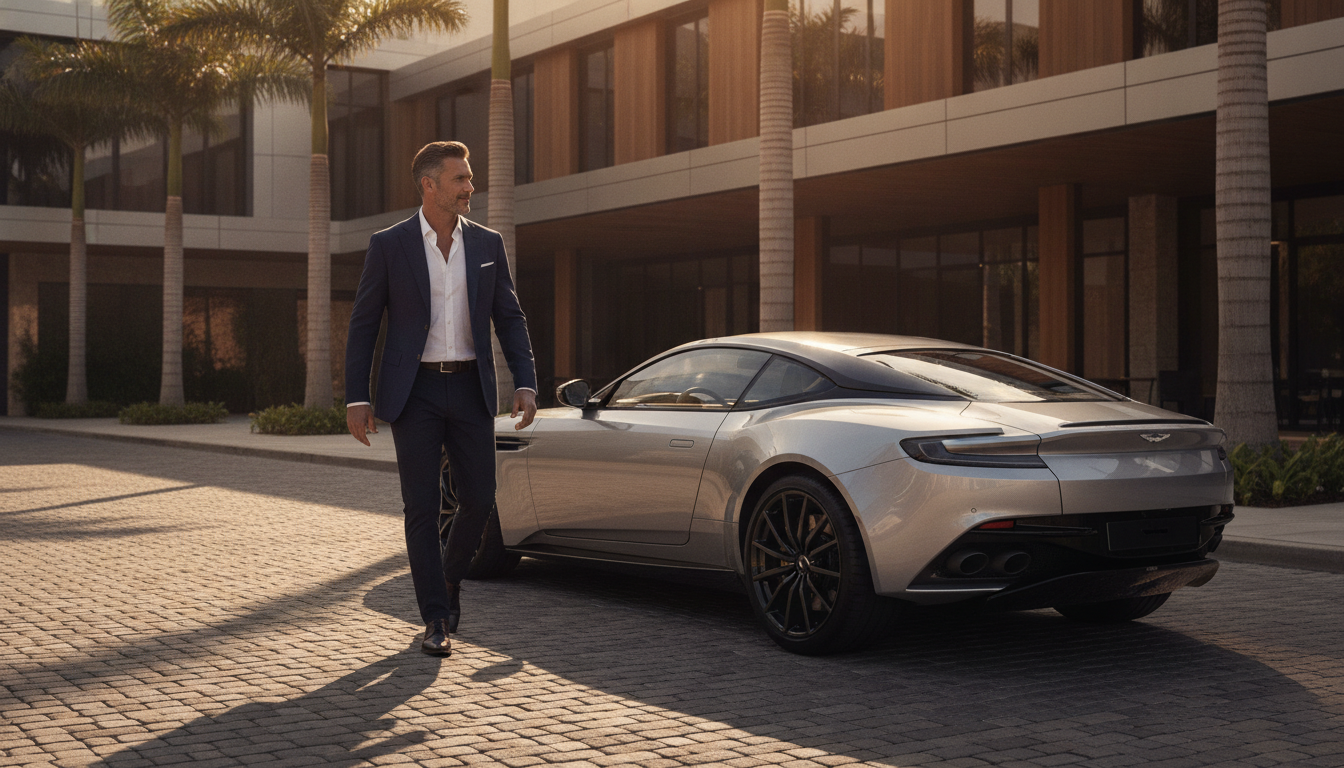
The fundamental question wealthy individuals should ask centers on whether PCP luxury car arrangements deliver value compared to traditional ownership models. I maintain a detailed cost analysis comparing three financing approaches for equivalent vehicles: PCP agreements, traditional bank loans, and cash purchases. Over a 10-year period encompassing multiple vehicle changes, PCP consistently proved most expensive in pure financial terms, costing approximately 18% more than traditional loans and 27% more than cash purchases when accounting for opportunity cost of capital at a conservative 6% annual return.
The premium buys flexibility and predictability. PCP agreements eliminate residual value risk since you can return the vehicle regardless of market conditions. Traditional ownership exposes you to depreciation volatility. The 911 Carrera S I nearly financed through PCP was quoted at €72,000 balloon payment after three years. If market conditions deteriorate and similar vehicles trade at €65,000, I simply hand back the keys and walk away. If I'd purchased outright, that €7,000 difference represents my loss. This insurance against residual value collapse costs approximately €2,300 annually based on my calculations, a reasonable premium for complete market risk transfer on a six-figure asset.
For context on alternative approaches, my article on prestige car finance balloon payment structures explores traditional loans in greater depth, comparing total cost implications across different ownership models. The data consistently shows that high-net-worth individuals benefit from traditional loans when they plan to retain vehicles beyond typical PCP terms of three to four years, while PCP suits those who prefer regular vehicle changes without exposure to depreciation risk.
Questions to Ask Before Signing Any PCP Luxury Car Contract
I developed a standardized question list after reviewing 14 different PCP luxury car proposals across seven manufacturers over four years. These questions consistently reveal costs and conditions that dealerships prefer to gloss over during initial presentations. Asking them transforms the power dynamic from passive recipient of a pre-packaged offer to informed negotiator who understands the product's true structure.
- What is the exact per-kilometer or per-mile excess mileage charge, and can I increase my annual allowance now rather than paying penalties later?
- Will you provide the complete Fair Wear and Tear Guide referenced in the contract before I sign?
- What is the total amount payable under this agreement, including all interest and fees, and how does that compare to a traditional loan for the same vehicle and term?
- Can you show me the depreciation model or guaranteed future value calculation methodology used to determine the balloon payment?
- What are the specific charges for early termination, and at what point does the voluntary termination right become available?
- Does this agreement include gap insurance, and if not, what are my options for obtaining it independently?
- Who conducts the final inspection, what are their qualifications, and can I arrange a pre-return inspection 60 days before contract end?
The consultant's responses reveal whether you're working with a professional who understands the product thoroughly or a salesperson focused solely on monthly payment and handover date. When I asked these questions at a BMW dealership in Frankfurt's Westend district, the consultant immediately retrieved a detailed term sheet answering most items proactively. At a different luxury dealership in Paris, the representative dismissed several questions as "standard terms we cannot modify," a response that prompted me to seek alternative financing.
Frequently Asked Questions
Can I negotiate the mileage allowance and wear-and-tear standards in a PCP luxury car contract?
Mileage allowances are negotiable within the lender's parameters, typically ranging from 10,000 to 25,000 kilometers annually. Increasing your allowance raises monthly payments since higher mileage accelerates depreciation and reduces the guaranteed future value. I negotiated my allowance from 15,000 to 18,000 kilometers annually, adding €47 to my monthly payment but eliminating the risk of €0.28 per-kilometer penalties. Wear-and-tear standards reference industry guidelines and remain non-negotiable, though some lenders offer wear-and-tear insurance products that cover minor damage within defined limits for an additional monthly fee of €15 to €35.
What happens if I want to buy the PCP luxury car at the end of the contract?
You settle the balloon payment and any outstanding charges, taking full ownership of the vehicle. Some lenders offer refinancing of the balloon payment through a separate loan, allowing you to spread that final cost over an additional 12 to 36 months. I exercised this option on a previous vehicle when market values significantly exceeded the guaranteed future value, effectively purchasing €8,200 in equity for the cost of refinancing €64,000 over 24 months at 6.4% APR.
How does PCP differ from traditional prestige car lease agreements?
PCP agreements provide three end-of-term options: return the vehicle, settle the balloon payment to own it, or use any equity above the balloon payment as a deposit on your next vehicle. Traditional leases offer only vehicle return, with no ownership pathway. Monthly payments under leases typically run 12% to 18% lower than equivalent PCP terms because leases assume you will definitely return the vehicle, eliminating any equity position. My detailed comparison of both approaches appears in my overview of prestige car leasing structures, examining which scenarios favor each model.
Can I modify or personalize a vehicle under a PCP luxury car agreement?
Modifications require written approval from the finance company since they technically own the vehicle until you settle the balloon payment. Reversible additions like custom floor mats or protective film generally receive approval. Permanent changes like aftermarket exhaust systems, suspension modifications, or custom paint typically face rejection because they alter the vehicle's specification and potentially reduce its residual value. I requested approval to install a €2,400 carbon fiber interior trim kit on a previous PCP vehicle and received denial within three business days, the lender citing non-reversibility and departure from factory specification.
What documentation should I keep throughout a PCP luxury car term?
Maintain dated photographs of the vehicle's condition at collection and quarterly thereafter, all service records with stamps from authorized dealerships, tire replacement receipts showing tread depth and date of installation, and correspondence with the finance company regarding any contract modifications or concerns. This documentation proves invaluable during final inspection disputes. I store digital copies in a dedicated cloud folder with automatic smartphone backup, ensuring accessibility regardless of device failure or loss.
The Strategic Value of Informed PCP Luxury Car Decisions
Personal Contract Purchase agreements serve wealthy buyers well when entered with complete understanding of their economic structure and contractual obligations. The flexibility they provide allows you to drive premium vehicles that might otherwise tie up capital better deployed in investments generating returns exceeding the cost of automotive finance. A €140,000 deployed in a diversified portfolio returning 8% annually generates €11,200 in the first year, while a PCP luxury car agreement on that same vehicle costs approximately €7,800 in interest and fees over three years, or €2,600 annually. The mathematics favor PCP when your capital produces returns exceeding the financing cost.
The hidden costs I've outlined transform attractive PCP luxury car proposals into expensive commitments only when you fail to identify and address them during negotiation. Mileage allowances, wear-and-tear standards, early termination penalties, and inspection processes all remain visible in the contract documentation if you request and review it thoroughly before signing. The dealerships that dismissed my detailed questions ultimately revealed themselves as institutions prioritizing transaction completion over client education, a distinction that matters enormously when you're committing to a multi-year financial obligation on a six-figure asset.
I continue using PCP agreements for vehicles I intend to change every three years, particularly limited-production models where residual values carry uncertainty. For vehicles I plan to retain long-term, traditional financing through my private bank delivers better economics and eliminates the administrative burden of mileage tracking and condition documentation. The key lies in matching the financing structure to your actual usage pattern and ownership intentions rather than accepting whatever product the dealership offers most enthusiastically. Request the complete contract terms, read every section including the small print, and ask every question that occurs to you regardless of how basic it might seem. Those three practices have saved me €18,700 in unnecessary charges across four PCP luxury car agreements over six years, money that remains invested rather than transferred to finance companies through avoidable penalties and inflated repair charges.