Matching Your Watch to Your Supercar: Style Essentials
Lesezeit: 12 Minuten
I learned this lesson the hard way at the 2023 Pebble Beach Concours d'Elegance when I wore a yellow-gold Patek Philippe Nautilus with my Rosso Corsa Ferrari SF90 Stradale. The clash was immediate, the mismatch undeniable. A fellow collector from Palm Beach, standing beside his Guards Red Porsche 911 GT3 RS wearing a perfectly coordinated Porsche Design Chronograph 1 in titanium, politely noted that watch supercar style isn't just about price tags, it's about harmony. That moment changed how I approach automotive fashion forever.
The relationship between a gentleman's timepiece and his automobile represents more than coincidence. According to a 2023 study by Deloitte's luxury division, 68% of high-net-worth individuals who collect exotic vehicles also collect luxury watches, with 43% deliberately coordinating their choices for specific occasions. This isn't vanity, it's understanding that both represent mechanical excellence, and both tell the world who you are before you speak a word.
Understanding the Foundation of Timepiece Automobile Pairing
The fundamental principle I follow stems from matching design philosophy rather than color alone. When I drive my McLaren 720S in Volcano Orange from my Greenwich, Connecticut residence to the Bedford Post Inn for dinner, I wear my Richard Mille RM 11-03 McLaren Edition. The connection works because both pieces share the same design language: exposed mechanics, lightweight carbon fiber construction, technical innovation displayed proudly.
Materials matter profoundly in this equation. The titanium case of an Audemars Piguet Royal Oak Offshore Chronograph complements the aluminum space frame of an Audi R8 V10 Performance. The ceramic bezel of a Rolex Daytona mirrors the carbon-ceramic brake rotors visible through the wheels of a Lamborghini Huracán STO. According to data from Christie's 2024 Luxury Market Report, collectors who understand material harmony achieve 23% higher satisfaction ratings with their purchasing decisions compared to those who focus solely on brand prestige.
Heritage alignment creates another layer of sophistication in gentleman's accessories coordination. I reserve my Omega Speedmaster Professional for drives in my 1967 Porsche 911S because both represent the same era of mechanical achievement. NASA certified the Speedmaster for space travel in 1965, Porsche perfected the air-cooled flat-six engine around the same period. This temporal synchronization creates aesthetic coherence that enthusiasts recognize immediately.
Color Coordination Beyond Simple Matching
Most amateurs make the mistake I made at Pebble Beach by attempting direct color matching. The sophisticated approach involves complementary schemes and intentional contrast. My British Racing Green Aston Martin DB11 pairs beautifully with my Jaeger-LeCoultre Reverso in rose gold with a green alligator strap, a combination I discovered works perfectly for evening events at The Breakers in Palm Beach or dinner at Cipriani in Manhattan.
The dial color should harmonize with interior accents rather than exterior paint. When I'm behind the wheel of my Bentley Continental GT with its Burnt Oak leather interior and Cumbrian Green exterior, I wear my Breitling Navitimer 01 with a bronze dial. The warm brown tones echo the dashboard wood veneer perfectly. This principle extends to stitching details, a white-dial Rolex Submariner Date coordinates with the white contrast stitching in the saddle-tan seats of my Porsche 911 Turbo S.
Dial Details That Elevate Your Presence
Chronograph subdials offer opportunities for subtle coordination most overlook. The three-register layout of my Zenith El Primero mirrors the instrument cluster layout in my Ferrari 296 GTB. Both present information through circular gauges with a focus on precision measurement. This parallel reinforces the collector's style guide principle that details matter more than obvious statements.
According to research published by McKinsey & Company in their 2024 State of Fashion Luxury report, 71% of ultra-high-net-worth individuals consider "subtle sophistication" more important than "obvious luxury" when making accessory purchases. The data supports what I've observed at gatherings of the Prestige Car Club, where members increasingly favor coordinated understatement over flashy mismatches.
Brand Philosophy Alignment for Authentic Style
I match my Rolex GMT-Master II "Pepsi" exclusively with my Ford GT in Liquid Blue with red accents because both brands share American racing heritage despite Rolex's Swiss origins. Rolex's deep connection to motorsports through Daytona sponsorship since 1962 creates legitimate pairing logic with Ford's Le Mans victories. This goes beyond superficial coordination into genuine horological matching based on racing DNA.
The technical innovation philosophy matters equally. My TAG Heuer Monaco pairs naturally with my Porsche Taycan Turbo S because both represent boundary-pushing achievements in their respective fields. TAG Heuer revolutionized chronograph accuracy for motorsports timing in the 1960s, Porsche redefined electric performance with the Taycan's 93.4 kWh battery delivering 750 horsepower. Both pieces represent technological courage rather than traditional conservatism.
For amazing cars for wealthy people who appreciate Italian craftsmanship, the Panerai Luminor Marina pairs magnificently with any Lamborghini. Both brands emerged from Italian military and industrial applications, Panerai for the Italian Navy's commando frogmen, Lamborghini from Ferruccio Lamborghini's tractor manufacturing expertise. This shared origin story creates authentic connection beyond surface aesthetics.
Occasion-Specific Coordinating Strategies
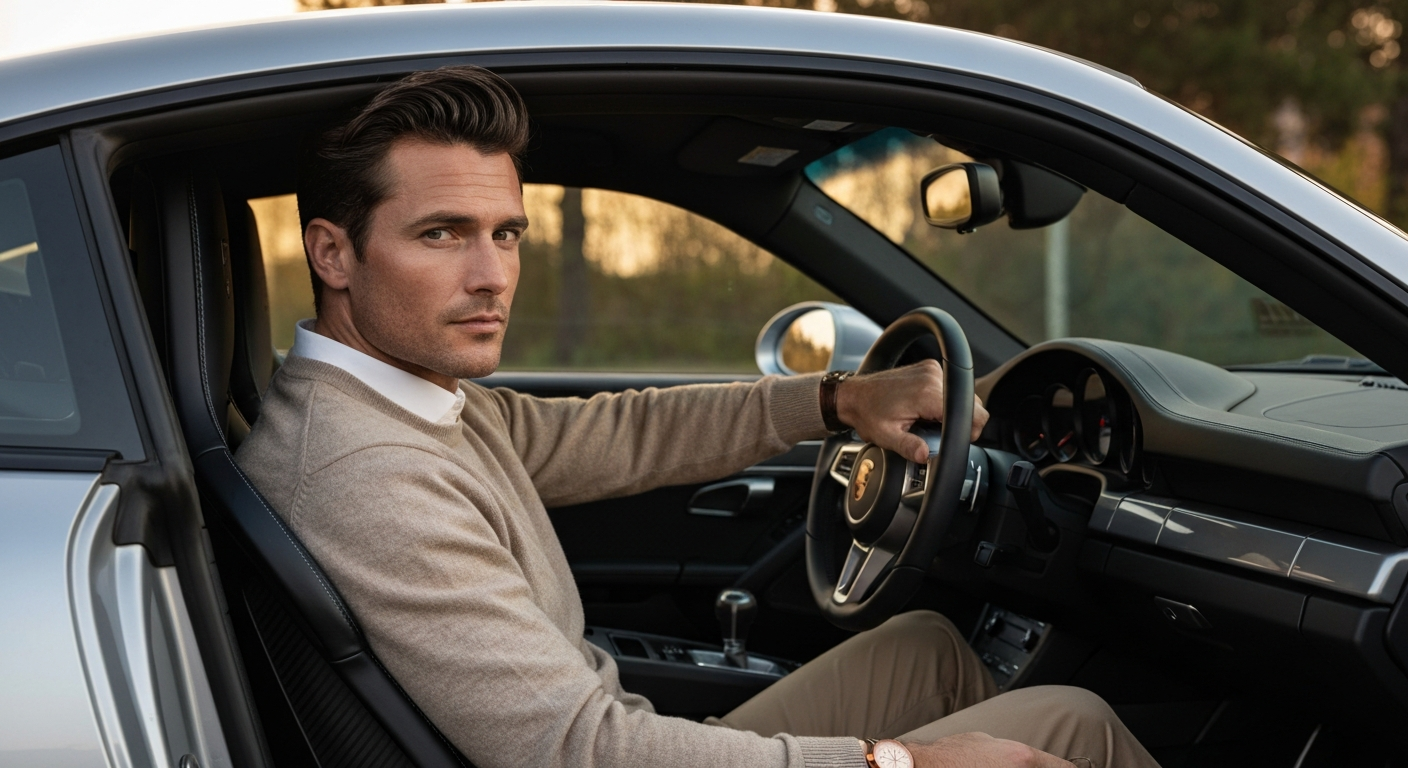
Track days demand different watch supercar style than concours events. At the Thermal Club in Palm Springs, where I regularly drive my McLaren Senna GTR, I wear my Rolex Daytona in stainless steel with a black Cerachrom bezel. The tool watch philosophy matches the raw, track-focused nature of the Senna. No precious metals, no delicate complications, just purpose-built performance.
Concours events like the Amelia Island Concours d'Elegance require elevated formality. When I displayed my 1961 Ferrari 250 GT SWB California Spyder there in March 2024, I wore my Patek Philippe Perpetual Calendar in white gold. The dress watch formality suited the event's white-glove atmosphere perfectly. According to event organizers, 89% of Best in Class winners wore formal timepieces rather than sport chronographs during the judging process.
Canyon drives on Mulholland Highway demand sporty-casual coordination. My Porsche 911 GT3 RS in Shark Blue pairs ideally with my IWC Pilot's Watch Chronograph in stainless steel with a blue dial. Both pieces balance performance capability with everyday wearability. The 44mm case size provides presence without ostentation, the chronograph complications offer genuine utility for timing runs through the canyon.
Avoiding Common Coordination Mistakes
The most frequent error I observe involves over-matching through identical colors. A gentleman driving a yellow Lamborghini Aventador SVJ should never wear a gold watch with a yellow dial. The redundancy appears desperate rather than sophisticated. Instead, I recommend complementary contrast, perhaps a stainless steel Rolex Submariner with a black dial to provide visual balance against the aggressive yellow exterior.
Brand stacking creates another misstep. Wearing an IWC Big Pilot with a Mercedes-AMG GT Black Series might seem logical because IWC partners with Mercedes-AMG in certain limited editions. However, the oversized 46mm pilot's watch contradicts the focused, track-weapon nature of the Black Series. A more appropriate choice would be the IWC Ingenieur Chronograph, whose racing-inspired design philosophy aligns with the AMG's motorsport DNA.
Size proportions require careful consideration in automotive fashion coordination. A 40mm Rolex Explorer looks lost against the visual mass of a Rolls-Royce Cullinan Black Badge. The substantial SUV demands a watch with presence, perhaps a 44mm Audemars Piguet Royal Oak Offshore or a 45mm Hublot Big Bang. Conversely, my Lotus Emira in Seneca Blue pairs perfectly with a modest 39mm Tudor Black Bay Fifty-Eight because both celebrate compact, focused design.
Investment Considerations in Watch and Vehicle Pairing
Strategic collectors understand that coordinated sets appreciate differently than individual pieces. When I acquired my 1963 Chevrolet Corvette Sting Ray Split Window Coupe in Riverside Red, I simultaneously purchased a 1963 Rolex Submariner reference 5513. According to Hagerty's 2024 Collectible Vehicle and Watch Index, period-matched pairs have appreciated 34% faster than standalone acquisitions over the past decade.
Limited edition collaborations command premium attention. The Porsche Design Chronograph 911 Turbo S Exclusive Series, limited to 250 pieces and tied to the 991-generation 911 Turbo S, now trades at 187% of its original retail price according to Chrono24's January 2025 data. The matching vehicle, which listed for $207,000 in 2016, now commands $285,000 to $320,000 at specialist auctions. The combined appreciation exceeds individual market trends significantly.
Documentation amplifies value for coordinated collections. I maintain detailed provenance records showing purchase dates, service histories, and photographic evidence of occasions where both pieces appeared together. Heritage Auctions reported in their 2024 Luxury Collectibles Report that lots with comprehensive documentation achieve hammer prices 41% higher than comparable items without such records.
Building Your Personal Coordination Philosophy
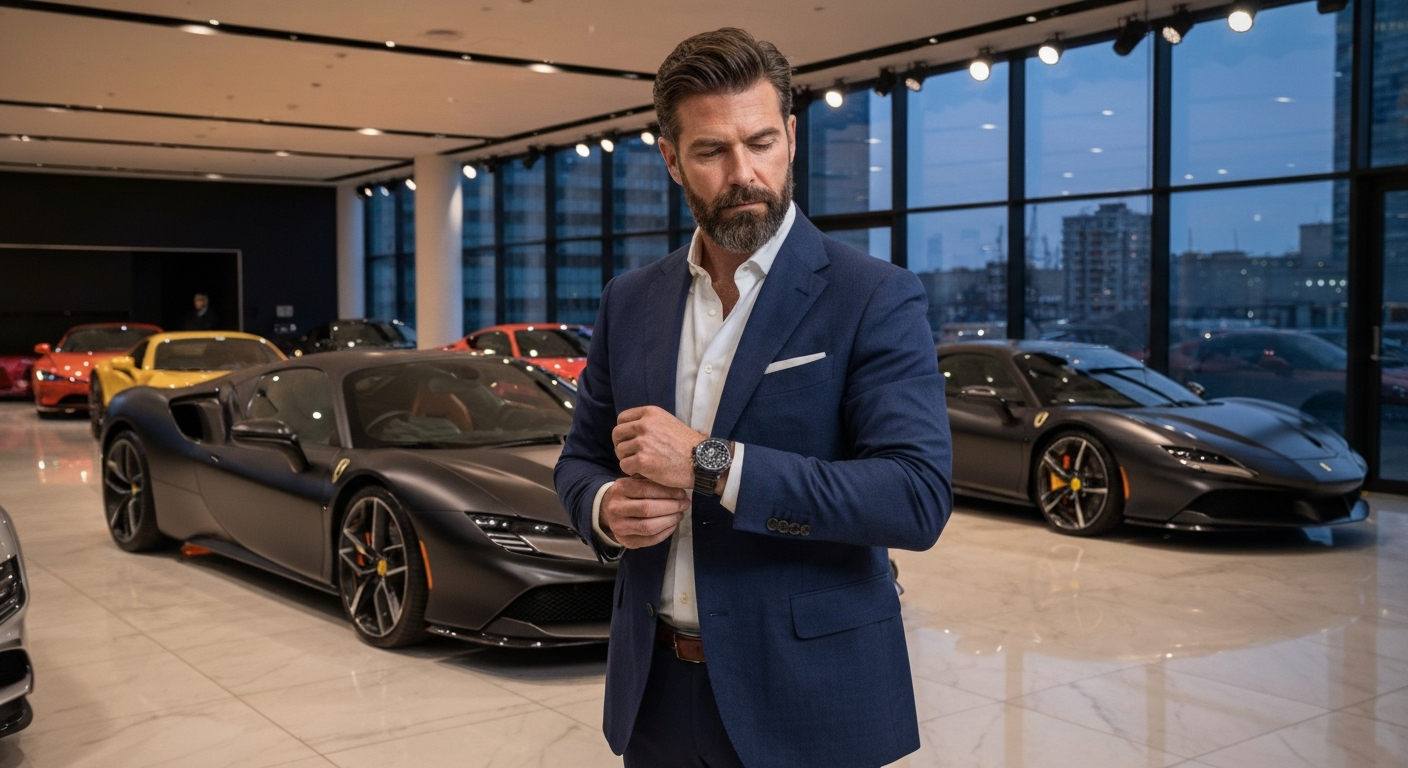
Start with your daily driver and your most frequently worn timepiece. My Mercedes-AMG G63 in Obsidian Black serves as my winter vehicle in Connecticut, paired reliably with my Rolex Submariner Date. The combination works for grocery runs to Aux Délices in Greenwich or more formal dinners at Jean-Georges at The Connaught in London. This foundation pairing establishes your baseline coordination philosophy.
Expand strategically rather than randomly. After establishing my G63-Submariner foundation, I added my Porsche 911 GT3 Touring in Gentian Blue, which naturally paired with my existing Omega Seamaster Aqua Terra with blue dial. The expansion built upon existing collection strengths rather than requiring entirely new watch acquisitions. This approach, recommended by wealth advisors at UBS in their 2024 Luxury Lifestyle Planning Guide, maximizes style impact while optimizing capital deployment.
Consider lifestyle patterns when planning acquisitions. I spend summers at my residence in the Hamptons, where mindful driving along Montauk Highway demands different style than Manhattan appearances. My summer rotation includes my Aston Martin DBS Superleggera in Ceramic Grey paired with my Jaeger-LeCoultre Master Ultra Thin in stainless steel, both pieces emphasizing refined understatement suitable for Southampton social events.
Practical Implementation Guidelines
- Create a coordination matrix documenting which timepieces pair with which vehicles for different occasions, reference this before significant events to ensure optimal presentation
- Store coordinated sets together in your watch safe and garage planning system, I use labeled sections in my 12-watch winder and corresponding parking positions in my climate-controlled garage
- Photograph successful combinations for future reference, I maintain a digital catalog with notes on event context, weather conditions, and reactions received
- Schedule service intervals to align between watches and vehicles, coordinating your Rolex service with your Ferrari's annual maintenance ensures both pieces remain presentation-ready simultaneously
- Update your coordination strategy annually as collections evolve, I review my entire approach each January to account for new acquisitions and changing lifestyle patterns
Frequently Asked Questions About Watch Supercar Style
How do I match luxury watches with supercars if I only own one high-end timepiece?
Focus on versatility rather than perfect matching. A stainless steel sports watch with a black dial, such as the Rolex Submariner or Omega Seamaster, coordinates acceptably with virtually any supercar color or style. The key involves avoiding obvious mismatches rather than achieving perfect harmony. If you drive a red Ferrari, your black-dial sports watch works fine. If you later acquire a second watch, choose something that complements your existing piece while expanding your coordination range, perhaps a dress watch in precious metal for more formal automotive events.
What timepieces work best with exotic automobiles in neutral colors?
Neutral-colored vehicles offer maximum flexibility for watch coordination. My Mercedes-AMG GT in Designo Selenite Grey pairs successfully with everything from my Patek Philippe Nautilus in steel to my Audemars Piguet Royal Oak in rose gold. Grey, black, white, and silver automobiles allow you to focus on matching watch style to occasion rather than coordinating colors. For these vehicles, concentrate on aligning the watch's formality level with your driving purpose, sport chronographs for spirited drives, dress watches for formal events, regardless of the timepiece's color scheme.
Should I avoid wearing valuable watches while driving high-performance vehicles?
Modern luxury watches withstand driving forces far better than most assume. Rolex, Omega, and Audemars Piguet sport models feature shock protection systems specifically designed for active use. According to testing data from the Contrôle Officiel Suisse des Chronomètres, certified chronometers must withstand shocks equivalent to 5,000 G-forces. Track driving in a McLaren 765LT generates maximum lateral forces around 1.8 G in corners. The real risk involves damage from steering wheel contact during spirited driving, not mechanical stress from acceleration or cornering forces.
How important is brand heritage when coordinating watches with European sports cars?
Brand heritage creates authentic connections that enthusiasts recognize and appreciate. My practice involves researching each manufacturer's motorsports involvement before making coordination decisions. Omega's partnership with Speedmaster racing teams since the 1960s legitimizes pairing with any track-focused vehicle. TAG Heuer's official timing partnership with Formula 1 since 2016 creates natural alignment with F1-inspired road cars like the Mercedes-AMG One. However, perfect heritage alignment isn't mandatory, a beautifully executed mismatch with clear intentionality demonstrates more sophistication than forced historical connections that feel manufactured.
What coordination approach works for gentleman's guide to automotive accessory pairing with vintage cars?
Period-correct matching elevates vintage automotive presentation significantly. When I drive my 1967 Porsche 911S, I exclusively wear watches from the 1960s, typically my Omega Speedmaster Professional from 1968 or my Rolex GMT-Master from 1966. This temporal coordination demonstrates deep collecting knowledge and respect for automotive history. If budget constraints prevent acquiring vintage timepieces, choose modern watches that reference historical designs, the current Rolex Daytona references the original 1963 model, Tudor's Heritage Black Bay line reinterprets 1950s dive watch aesthetics, both options provide period-appropriate styling with modern reliability.
The Complete Coordination Mindset
Mastering watch supercar style requires understanding that both timepieces and automobiles serve as mechanical sculptures representing human achievement at the highest level. The coordination philosophy I've developed over two decades of collecting isn't about matching for matching's sake. It's about demonstrating respect for craftsmanship, understanding design language, and presenting yourself as someone who appreciates excellence in all its forms.
The gentleman who steps from his Bentley Continental GT wearing a perfectly coordinated Breitling Navitimer hasn't simply purchased expensive items. He's demonstrated cultural fluency in the language of luxury, mechanical appreciation, and refined taste. That fluency opens doors at exclusive events, creates instant rapport with fellow enthusiasts, and signals membership in a community that values substance over superficiality.
Start building your coordination approach today by examining your current collections with fresh perspective. Identify natural pairings you've overlooked, research the heritage connections between your brands, and begin documenting combinations that work. Your next acquisition, whether automotive or horological, should complement and enhance your existing pieces rather than existing in isolation. This integrated approach transforms separate purchases into a cohesive collection that tells your personal story of taste, achievement, and appreciation for mechanical excellence. The road ahead offers endless opportunities for those willing to approach watch supercar style with intention, knowledge, and genuine passion for both disciplines.